
What is the best hook size for crocheting potted plants?
Oct 27, 2025
Leave a message
Hey there, fellow crochet enthusiasts! I'm a supplier of crocheted potted plants, and I've been getting a ton of questions lately about the best hook size for crocheting these adorable green companions. So, I thought I'd sit down and share my insights with you all.
First off, let's talk about why hook size matters. The hook size you choose can have a huge impact on the final look and feel of your crocheted potted plants. A smaller hook will create a tighter stitch, resulting in a more detailed and delicate plant. On the other hand, a larger hook will produce a looser stitch, giving your plant a more airy and organic look.
So, what's the best hook size for crocheting potted plants? Well, it really depends on a few factors, such as the type of plant you're making, the yarn you're using, and your personal preference. Let's break it down.
Type of Plant
Different types of plants have different textures and shapes, which can influence the hook size you should use. For example, if you're making a succulent plant, you might want to use a smaller hook to create the tight, compact leaves. A size 2.5mm or 3.0mm hook would work well for this. On the other hand, if you're making a fern or a moss plant, a larger hook might be more appropriate to create the wispy, flowing fronds. A size 4.0mm or 5.0mm hook would be a good choice here.
Yarn
The type and weight of the yarn you're using can also affect the hook size. Thicker yarns generally require a larger hook, while thinner yarns need a smaller hook. For most crocheted potted plants, I recommend using a medium-weight yarn, such as worsted weight or aran weight. For these yarns, a hook size between 3.5mm and 4.5mm is usually a good starting point.
Personal Preference
Ultimately, the best hook size for you is the one that feels comfortable in your hand and produces the look you're going for. Some people prefer a tighter stitch, while others like a looser, more open stitch. Don't be afraid to experiment with different hook sizes until you find the one that works best for you.
Now that we've covered the basics, let's take a look at some specific hook sizes and the types of plants they're best suited for.
Small Hook Sizes (2.5mm - 3.5mm)
- Succulents: As mentioned earlier, small hook sizes are great for creating the tight, compact leaves of succulent plants. You can use a size 2.5mm or 3.0mm hook to make detailed leaves and stems.
- Miniature Plants: If you're making small, delicate plants, such as fairy garden plants or bonsai trees, a small hook size will help you create the intricate details.
- Fine Yarns: If you're using a fine yarn, such as lace weight or fingering weight, a small hook size will ensure that your stitches are tight and even.
Medium Hook Sizes (3.5mm - 4.5mm)
- Most Potted Plants: This is the most versatile range of hook sizes and is suitable for a wide variety of potted plants. You can use a size 3.5mm or 4.0mm hook to make leaves, stems, and flowers that are both detailed and easy to work with.
- Medium-Weight Yarns: As mentioned earlier, medium-weight yarns, such as worsted weight or aran weight, are a popular choice for crocheted potted plants. A medium hook size will work well with these yarns.
Large Hook Sizes (4.5mm - 5.5mm)
- Ferns and Moss Plants: Large hook sizes are great for creating the wispy, flowing fronds of fern and moss plants. You can use a size 4.5mm or 5.0mm hook to make loose, airy stitches that mimic the look of real plants.
- Thick Yarns: If you're using a thick yarn, such as bulky weight or super bulky weight, a large hook size will help you work up the project quickly and easily.
In addition to the hook size, there are a few other things to keep in mind when crocheting potted plants. Here are some tips to help you get the best results:

- Use a Stitch Marker: When crocheting in the round, it's easy to lose track of where you are. Using a stitch marker will help you keep your place and ensure that your stitches are even.
- Block Your Work: Blocking is the process of shaping and sizing your crocheted piece. After you've finished crocheting your plant, block it to give it a more professional look. You can use a spray bottle and a blocking board to block your work.
- Add Details: To make your crocheted potted plants look more realistic, you can add details such as veins, texture, and color variations. You can use embroidery floss, yarn scraps, or other materials to add these details.
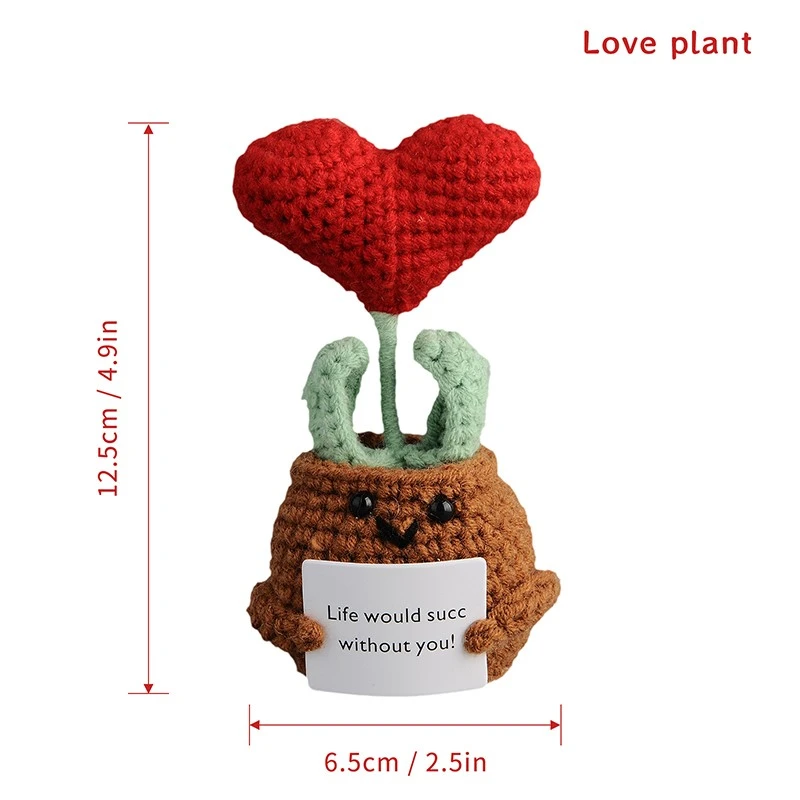
Now, let's take a look at some of the products we offer at our crocheted potted plants store. We have a wide variety of beautiful and unique crocheted potted plants, including Crocheted Animal Rattle Set, Crocheted Succulent Plant Set, and Crocheted Heart Planters. These products are made with high-quality yarn and attention to detail, and they're perfect for adding a touch of nature to your home or office.
If you're interested in purchasing our crocheted potted plants or have any questions about crocheting, please don't hesitate to contact us. We're always happy to help! Whether you're a beginner or an experienced crocheter, we have something for everyone. So, why not add a little bit of handmade charm to your life with our beautiful crocheted potted plants?
References
- Stitch 'n Bitch Crochet: The Happy Hooker by Debbie Stoller
- Crochet for Dummies by Edie Eckman
- The Complete Photo Guide to Crochet by Jean Leinhauser